

Carlos Beltrán and Andruw Jones have been elected into the Baseball Hall of Fame, the BBWAA announced Tuesday night. The slugging center fielders join Jeff Kent (elected by the Contemporary Baseball Era Committee last month) in the 2026 class. As we sift through the voting percentages and seek the significant conclusions, some winners and losers emerge beyond the clear winners, Beltrán and Jones. Let’s discuss a few.
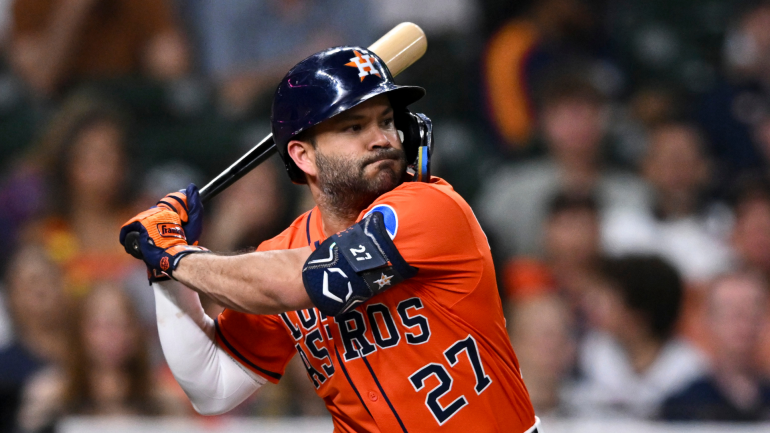
Winner: Jose Altuve
Wait, what? Altuve is still active. How can he be a winner here?
It’s indirect. Occasionally, voting reveals a domino effect. A stigma has followed players from Coors Field, but once Larry Walker got inducted, Todd Helton’s path became much simpler. This situation is different, though; the 2017 Astros bear the weight of the electronic sign-stealing scandal. In my opinion, this is why it took Beltrán four attempts to get in instead of two or one.
Now that “El Jefe” from that 2017 championship team is in, is Altuve’s pathway less complicated? It seems likely. He has 2,388 career hits with a .303 average, three batting titles, appealing to traditional voters alongside WAR and JAWS statistics that modern voters appreciate.
I consider it possible that Altuve’s case is viewed differently from Beltrán’s, but this update is undoubtedly uplifting for the 2017 MVP.
Winner: Chase Utley
Utley has bright prospects for Hall of Fame induction. I have discussed him as a deserving peak Hall of Fame candidate over the last three years, and he’s gaining traction. After receiving 28.8% of the vote in his debut year and 39.8% last year, he has now reached 59.1% this time around in his third ballot year. With seven more chances, his vote percentage should continue to climb, especially given the comparatively weak ballot anticipated next year.
Loser: Manny Ramírez
Manny is now off the ballot after failing to garner 75% in his tenth and final year. Ramírez received only 38.8% of the votes. We’ve seen Barry Bonds and Roger Clemens shut out twice by the Era Committee, and Ramírez was suspended twice for PEDs (neither Bonds nor Clemens faced suspensions). Simply put, barring extraordinary circumstances in the coming years or decades, Ramírez will never make it to the Hall of Fame.
Loser: Alex Rodríguez
In his fifth year, A-Rod made marginal progress - but not enough to believe he’ll eventually secure the 75% of the vote necessary for Hall of Fame induction. His vote percentages have shifted from 34.3% to 35.7% to 34.8% to 37.1% to 40.0%. He no longer needs to more than double his vote tally, yet it remains very close. Achieving that seems uncertain.
Loser: Robinson Canó
Conversely to Altuve, Canó is an indirect loser. His statistics reveal a resume worthy of Hall of Fame inclusion. He’s a career .301/.351/.488 (124 OPS+) hitter with 68.7 WAR, showcasing some of the finest power statistics from a second baseman. He ranks second in home runs, fifth in RBIs, sixth in slugging percentage, and tenth in WAR at his position. However, he faced an 80-game suspension for a failed PED test in 2018. Considering Ramírez’s experience and A-Rod’s trajectory, it seems we can firmly close the door on Canó’s Hall of Fame aspirations before he even appears on a ballot.
Winners: Félix Hernández and a New Generation of Starters
For a decade, I’ve maintained that only the very top-tier aces from recent generations are securing induction into the Hall of Fame. That trend persists. Of the top 50 starting pitchers in WAR during the Wild Card Era (1995-present), only Randy Johnson, Pedro Martínez, Roy Halladay, Mike Mussina, Greg Maddux, CC Sabathia, Tom Glavine, and John Smoltz are enshrined. Older generations featured over 20 starters who made it. I’ve illustrated this point through various cases recently. While Justin Verlander, Max Scherzer, Clayton Kershaw, and likely (hopefully?) Zack Greinke are destined for Cooperstown upon eligibility, the shortfall compared to older eras remains notable.
Perhaps there’s progress to be seen. King Félix achieved 46.1% of the vote in his second attempt, marking a 25.5-point increase from his first year. Hamels debuted at an admirable 23.8%. Even Andy Pettitte, with his PED complications, alongside Mark Buehrle (traditionally unappealing for many voters and fans), made commendable advances this voting period — showing 48.5% and 20%, respectively. Pettitte needs to improve, but he has a shot as his final years on the ballot approach.
This may bode well for Jon Lester (up next year), David Price (2028), Stephen Strasburg (2028), Adam Wainwright (2029), Corey Kluber (2029), and others.