Court Denies Charles Bediako's Request for NCAA Eligibility Amid College Basketball Controversy
A recent ruling has significant implications for college basketball as Charles Bediako's bid for an injunction against NCAA eligibility rules was rejected.

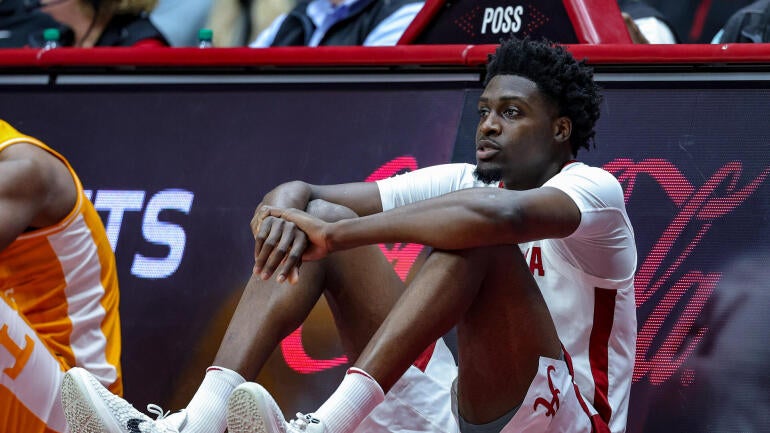
In a potential landmark ruling for college sports, a judge denied Alabama basketball player Charles Bediako’s motion for a preliminary injunction against NCAA eligibility standards, according to court documents obtained by AL.com. Bediako, who returned to the Crimson Tide after signing an NBA contract and participating in the G League, will no longer be eligible to play collegiate basketball per NCAA regulations.
Bediako was the first former professional player to attempt a return to college after obtaining a temporary restraining order against the NCAA in January, which allowed him to play in five games, averaging 10 points, 4.6 rebounds, and 1.4 blocks per game.
The temporary restraining order was a temporary fix to enable Bediako to compete. His ultimate goal was an injunction that would permit him to continue playing for the entire season. After a recent hearing, Judge Daniel Pruet ruled in favor of the NCAA, denying the requested injunction.
“Common sense won a round today,” NCAA President Charlie Baker stated. “The court recognized it as an attempt by professionals to revert to college and overshadow the upcoming student-athletes. College sports are meant for students, not for individuals looking to return to the amateur level after pursuing professionalism.”
Bediako’s return to collegiate basketball faced criticism, including an affidavit signed by SEC Commissioner Greg Sankey urging the court to uphold eligibility rules essential for maintaining the integrity of college athletics.
This case’s outcome may influence other ongoing eligibility disputes, as various students, including Joey Aguilar and Trinidad Chambliss, are currently navigating similar issues regarding their collegiate participation based on former professional experience.