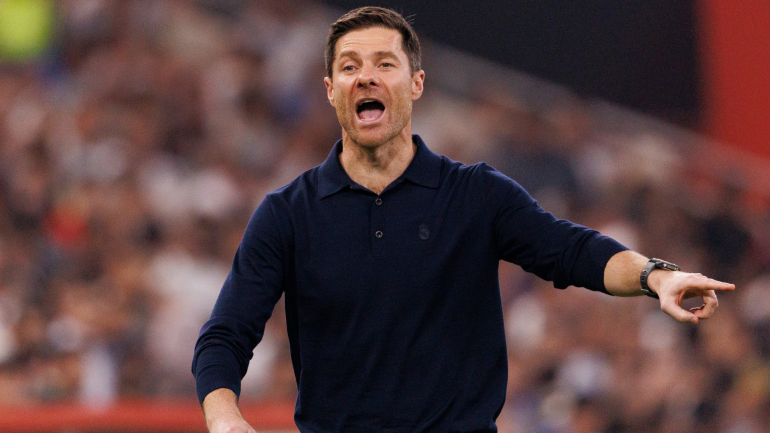
Examining the Future of Managers in European Soccer Amid Coach Turnover
As Xabi Alonso exits Real Madrid alongside other recent changes, the role of managers in football faces critical scrutiny and evolution.


“I’m going to give you some good advice, Brian Clough. No matter how good you think you are, or how clever, or how many fancy new friends you make on the telly, the reality of footballing life is this. The chairman is the boss, then come the directors, then the secretary, then the fans, then the players, and finally, last of all, bottom-of-the-heap, lowest of the low, the one in the end we can all do without, is the bloody manager.”
Fictional words from a very real man, Sam Longson’s shot across the bows of Brian Clough in The Damned United have rarely rung as true as they do in 2026. Is it too much to speculate whether a near 100 year experiment in the cult of personality is at an end?
Whether, in the raft of firings to start 2026, we have not just seen the long prophesied death of the manager as a solo headline act at a club, but the ending of the idea that the guy who coaches and picks the team might be the most important in the club?
What is certainly true is that their status at the highest level clubs has never seemed more precarious. Begin your tenure amidst an unfortunate run of off finishing? That’s a sacking.
Try to carve out authority for yourself amid countless executives? That’s a sacking.
Hold firm to the tactical identity that got you the job? That’s a sacking.
Cave to the demands of your players and watch performances suffer as a result? You best believe that’s a sacking.
It seems that there is nothing head coaches can do to liberate themselves from pressure on all sides. Take Xabi Alonso, as a smart club doubtless will now that he has entered the coaching pool. He returned to the Santiago Bernabeu not only as the sort of legendary former player, La Decima for starters, who deserved respect for his playing career, but as one of the sport’s outstanding coaches. His strength of will and vision had shaped Bayer Leverkusen into an elite European outfit. He had nothing to prove.
Such coaches do still flop. Alonso didn’t. Having got his feet under the desk at the Club World Cup, the 44-year-old proceeded to forge Real Madrid into probably the best team in Europe for the first few months of the season. Kylian Mbappe was the best he has ever been and it was clear that the press and possess style established in the Bundesliga could translate to one of the biggest teams in the world. At least it could in terms of results, some weirdness against Atletico Madrid notwithstanding.