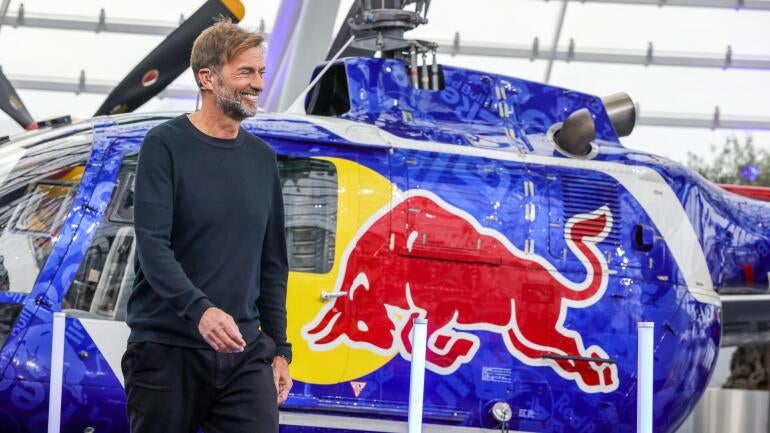


LEIPZIG, Germany – There is an unflinching honesty that seems to be shared by many at RB Leipzig about exactly where they stand in the soccer hierarchy, a sentiment expressed with notable bluntness.
Two days prior to their game against Bayern Munich—which they ultimately failed to secure—captain David Raum openly acknowledged that while they would strive to challenge the Bundesliga leaders, the DFB Pokal represented a more attainable goal for the season. Jurgen Klopp, now steering global soccer for Red Bull, was equally direct in his assessment.
“If Leipzig wins the league anytime, we’ll probably sell the five best players. Next year, you have to find five players who have a similar quality.”
Despite their awareness of the challenge ahead, Leipzig’s demeanour remains remarkably positive. Their failure to qualify for the UEFA Champions League last season marked only the second time they missed out since their first appearance in 2017-18. In response, they’ve embraced the tried-and-true strategies that have made them a staple in Europe’s upper echelons.
With fresh faces now populating the roster, including Klopp himself, Leipzig aims to return to their foundational goals, albeit with a modern twist. Managing Director for Sport Marcel Schafer openly expressed hopes of joining the ranks of clubs that have succeeded in knocking Bayern off their pedestal over the last two decades.
Marcel Schafer: “I think we need to be honest to ourselves. We need to be realistic. There are 10, 15 clubs who are above us and they likely will be for years to come.”
Klopp’s focus on RB Leipzig’s strategy is exemplified by their structural approach to play—an attack-oriented, high-intensity style. New coach Ole Werner, who recently joined from Werder Bremen, may have tweaked some specifics, but the core principles remain intact. Raum noted:
“With the ball, we play a little bit differently… now, playing with clear wingers helps us as fullbacks because we have very good one-on-one players.”
This strategy mirrors aspects of Klopp’s previous successes at Liverpool, even drawing comparisons to Luis Enrique’s Champions League-winning PSG. A notable acquisition under this new tactical framework is Yan Diomande, who has quickly become a notable player since joining from Leganes.
Klopp also reflects on the pragmatic approach to player retention, which aligns with Leipzig’s model of developing talent rather than hoarding it.
“We want to help players until they reach a stage where they can maximize their potential in the Bundesliga, understanding that transfer revenues are integral to our philosophy.”
Amid the financial power struggle in soccer, Klopp’s candid reflections on these financial disparities are insightful:
“Money’s a real topic in England. In Germany, we just accept that Bayern has more money so we don’t think about it. It is what it is.”
These perspectives define Klopp’s tenure, showcasing his prioritization of player development over immediate accolades, and his commitment to shaping a winning culture in Leipzig based on honesty and core values.