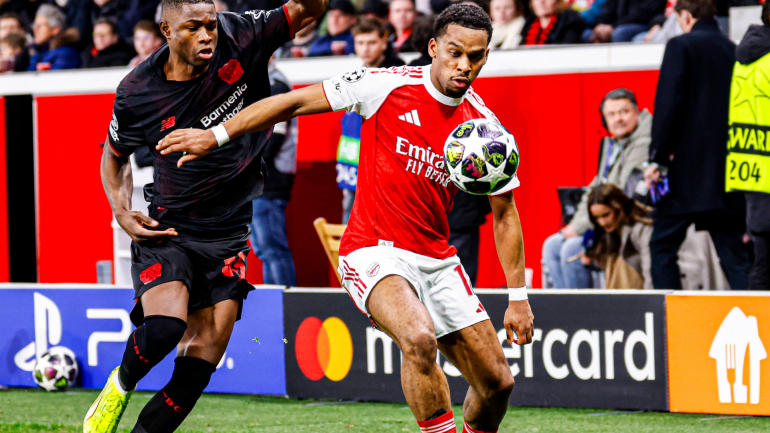


In 2026, there are significant reasons to expect full-backs like Jurrien Timber to be influential in attacking plays. They might possess skills akin to those of Trent Alexander-Arnold or can dictate the game like Federico Dimarco or Gabriel Magalhaes. This role is increasingly crucial for a team like Arsenal, which often relies on breaking down structured defenses.
Though Timber’s and Piero Hincapie’s involvement was notable in creating opportunities, it didn’t translate into effective scoring against Bayer Leverkusen in their 1-1 draw. Astonishingly, Arsenal had just six shots during the match, showcasing a particularly lackluster attacking performance.
Timber excelled in his attacking contributions previously, evidenced by his four goals and six assists this season. However, questions remain about whether he is ideally suited to be the focal point of Arsenal’s offensive strategies around the opponent’s goal.
The statistics show Timber’s touches in prime attacking positions exceed that of several talented players. This pattern suggests a recurring issue for Arsenal: a dependence on defenders to generate offense during matches rather than traditional forward players.
As Arsenal navigates through the season, the need for a dedicated playmaker becomes profoundly evident. Without a consistent playmaker in the squad, they struggle to convert possession into goal-scoring opportunities, leaving them to rely on players like Timber in less optimal situations.